What Not to Wear to an Interview: 10 Outfit Mistakes and Better Choices
10 interview outfit mistakes that cost jobs. Learn what to wear, what to avoid, and the “dress one level up” rule. HR insider guide with checklist.
Author: Hira Riaz
Published On 11 Sept, 2026.
TABLE OF CONTENTS
What not to wear to an Interview: A real Hiring Example
What not to wear to an Interview for Men and Women
What to wear to an Interview for Men and Women
Can you Wear Jeans to an Interview
Do Interviewers Notice Your Shoes?
What not to wear to a Virtual Interview
What to wear based on the Company and Industry
Estimated read time 8 minutes.
What Not to Wear to an Interview: A Real Hiring Example
Knowing what not to wear to an interview can prevent your appearance from weakening an otherwise strong first impression.
I once recommended a qualified candidate for a final interview. He had relevant experience, answered well and met the salary range.
Then he met the CEO.
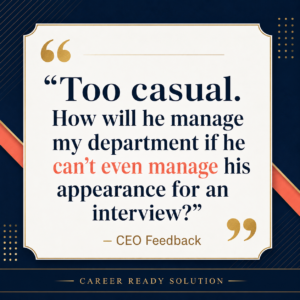
The feedback was immediate: “Too casual.”
His clothing and untidy appearance made the CEO question whether he was ready for a leadership role.
The lesson: Your outfit will not win you the job, but the wrong one can cost you the opportunity.
This guide explains which interview outfit mistakes to avoid and what to wear instead. For complete preparation, use my Interview Guide.
What Not to Wear to an Interview for Men and Women
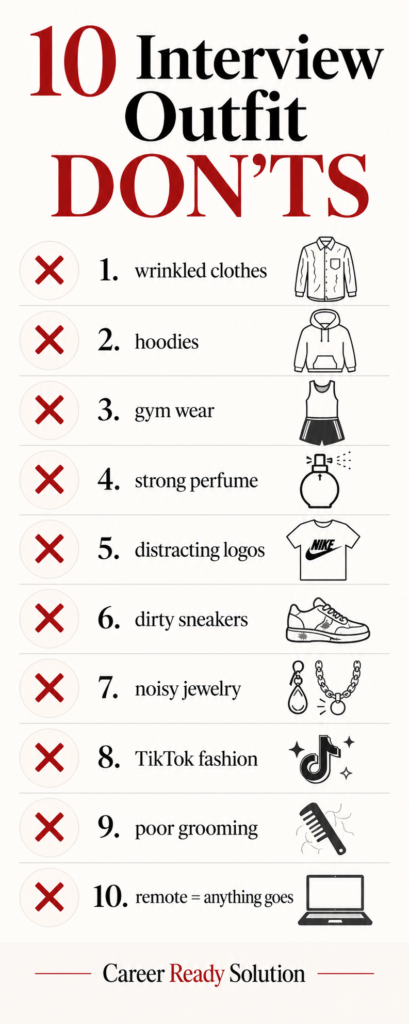
I’ve seen all of these and each one cost someone a job. Learn from their mistakes.
- Wrinkled clothes
I once interviewed a candidate who looked like he’d slept in his shirt. I couldn’t focus on his answers. Wrinkles signal “I didn’t prepare” and that’s a red flag. - Oversized hoodies or sweatshirts
This is the #1 mistake I see in virtual interviews. A hoodie tells me you’re comfortable but I’m not hiring you for comfort. I’m hiring you for professionalism. - Gym wear or leggings
I’ve seen candidates show up in yoga pants and think I wouldn’t notice. I notice. Gym wear belongs at the gym and not at an interview. Period. - Strong perfume or cologne
I’ve had interviews where I couldn’t breathe. Strong scents are distracting and unprofessional.
Some people are also allergic; you don’t want to be the candidate who gives the interviewer a headache.
- Distracting logos or graphics
A shirt with a giant logo or a funny slogan is not interview-appropriate. Keep it clean and simple. - Dirty sneakers
For in-person interviews, your shoes are the first thing I notice when you walk in. Dirty sneakers scream “I didn’t think this through.” - Noisy jewelry
Bangles, dangling earrings, and large bracelets make noise. Every time you move, I’m distracted. Keep accessories minimal. - Dressing for TikTok instead of the workplace
I’ve seen candidates wear trendy outfits that belong on a social media reel; not in an interview. My honest advice: Save the fashion risks for your personal time. - Ignoring grooming and hairstyle
Messy hair, unshaven face, or visible stains; these are all signals that you didn’t put in effort. Grooming matters. - Assuming “remote interview” means anything goes
I’ve had candidates wear a suit on top and pajama bottoms on the bottom thinking I wouldn’t see. I wouldn’t – until they stood up. Don’t risk it. Dress completely from head to toe.
What to Wear to an Interview for Men and Women
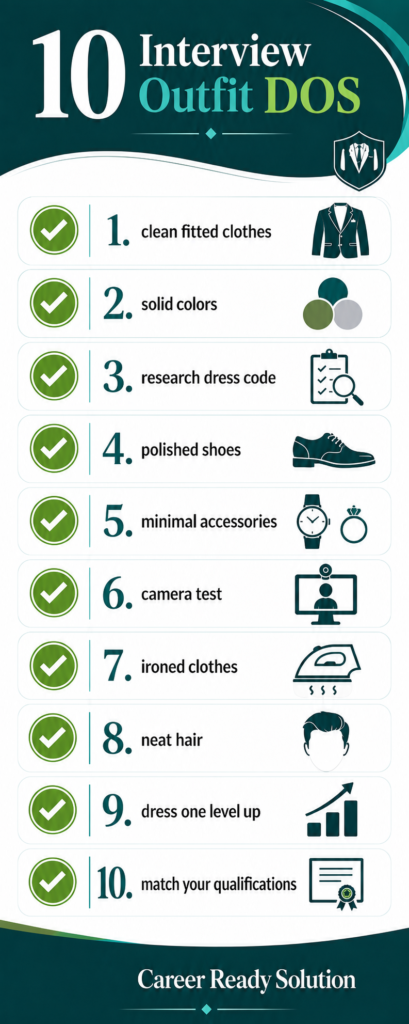
Being an HR Consultant, I suggest you follow these details. Simple, professional, and respectful.
- Wear clean, well‑fitted clothing
Nothing too tight, nothing too loose. Clothes that fit well look more professional and put‑together. And always iron them. - Choose solid colors over loud patterns
Solid colors are safe, clean, and don’t distract. Navy, charcoal, black, white, or soft pastels work best. - Research the company dress code before you go
Look at the company’s social media pages. What are employees wearing? Dress like them – but one level above. - Wear polished shoes
For in‑person interviews, clean, polished shoes show attention to detail. For virtual, it’s less visible – but dress fully anyway. - Keep accessories minimal
A simple watch or small earrings are fine. No noisy bangles or flashy necklaces. - Check your outfit on camera beforehand
Before a virtual interview, hop on a quick Zoom call with a friend. See how your outfit looks on screen. Colors that look great in person can appear faded or distract on camera. - Iron your clothes
Wrinkled clothes say “I didn’t care.” Ironing shows you prepared. - Keep hair neat and professional
Simple, clean, and out of your face. - Dress one level above the company norm
If the company is casual, wear business casual. If they’re business casual, wear business formal. This rule works every time. - Make your appearance match your qualifications
Your resume got you in the door. Your outfit should match the professional you claim to be
Can You Wear Jeans to an Interview?
Yes, you can wear jeans to some interviews, but it depends on the company and the position.
- Clean, dark jeans may be acceptable for a startup, creative company, retail store or casual workplace.
- Choose jeans that fit well and have no rips, fading or large designs. Pair them with a button-down shirt, blouse, polo or blazer. Complete the outfit with clean, professional shoes.
I would advise you to avoid jeans when interviewing for corporate, finance, legal, government or senior management positions. These workplaces usually expect formal or business-casual clothing.
If you cannot confirm the company’s dress code, choose dress pants, chinos, a professional skirt or a simple dress instead.
It is safer to look slightly more formal than too casual.
Do Interviewers Notice Your Shoes?
Yes, interviewers may notice your shoes, especially when you enter the room, walk toward them or sit down.
Your shoes do not need to be expensive. They simply need to be clean, comfortable and suitable for the workplace.
- Safe interview shoes include loafers, dress shoes, simple flats, low heels and clean ankle boots.
- Minimal sneakers may work for a casual startup, but avoid dirty athletic shoes, flip-flops, extremely high heels or anything difficult to walk in.
Choose shoes that match the rest of your interview outfit. Test them before interview day so you can walk confidently without discomfort.
What Not to Wear to a Virtual Interview
After COVID-19, Virtual interviews have become the norm. But many candidates treat them as less formal.
Here’s the truth: I evaluate virtual interviews just as in‑person ones.
Mistake 1: Wearing pajama bottoms or gym shorts
I’ve had candidates stand up mid‑interview – and reveal pajama bottoms. It’s awkward for both of us. Dress completely.
Mistake 2: Not checking camera placement
Your outfit looks great, but if your camera is low or high, it’s distracting. Position it at eye level before you start.
Mistake 3: Wearing distracting patterns on camera
Small stripes or herringbone can create a “moiré effect” (flickering patterns) on screen. Test before the interview.
Mistake 4: Choosing bright white
White shirts can look washed out or glare on camera. Soft blue, grey, or pastels work better.
Mistake 5: Ignoring the background
Your outfit is important – but so is your background. A messy room or a virtual beach background distracts from you.
From my HR Desk
I once interviewed a candidate who wore a hoodie, had a cluttered background, and clearly hadn’t brushed his hair. He gave great answers but I couldn’t take him seriously. I did not move him to the next stage.

What to Wear Based on the Company and Industry
|
Industry
|
Safe Choice
|
Avoid
|
|---|---|---|
|
Corporate (Finance, Law, Banking)
|
Suit, tie, formal dress, polished shoes
|
Casual wear, bright colors, sneakers
|
|
Tech / IT
|
Business casual (button‑down shirt, blouse, neat pants)
|
Hoodies, t‑shirts with logos, gym wear
|
|
Creative (Design, Marketing, Media)
|
Smart casual with personality (blazer, neat jeans, simple accessories)
|
Sloppy or overly formal (suit may feel out of place)
|
|
Startups
|
Clean casual (neat jeans, polo or blouse, blazer optional)
|
Gym wear, wrinkled clothes, loud patterns
|
|
Retail / Hospitality
|
Polished, clean, company‑style (often all‑black or specific colors)
|
Casual or messy
|
The rule: If you’re unsure, ask.
A simple email to the recruiter: “What’s the dress code for the interview?” shows initiative and preparation. Recently, one of my clients had an interview for the role of Procurement Officer at one of the construction companies in Dubai, UAE.
He was a little confused about the dress code. I suggest him to ask the recruiter. He emailed her about the dress code and got a reply. This is simple. Don’t make things difficult.
It’s always better to ask.
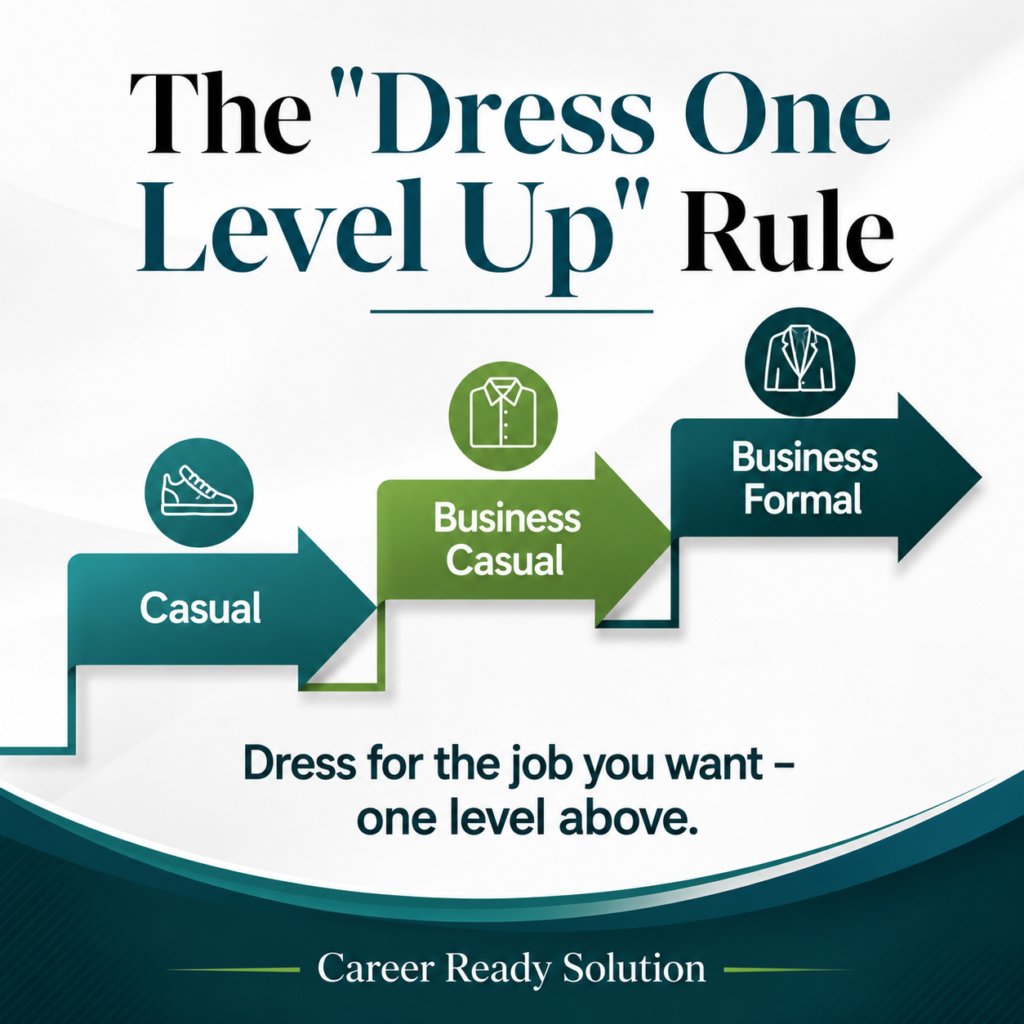
The Interview "Dress One Level Up" Rule
This is the simplest and most effective rule I’ve ever used. If the company is casual (jeans and t‑shirts), wear business casual (khakis and a button‑down).
If the company is business casual, wear business formal (suit and tie or dress).
If the company is business formal, wear your best suit.
Why does it work?
You show you understand the culture but also that you respect the opportunity and you look like you belong but also like you’re ready to grow into the role.
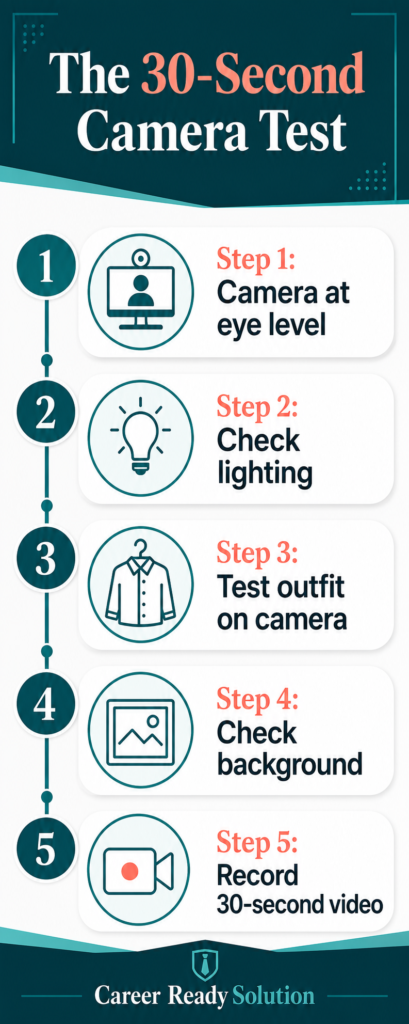
The 30‑Second Camera Test (Before Every Virtual Interview)
Before any virtual interview, do this: This takes 5 minutes and can save you from embarrassing surprises.
Conclusion: Let Your Outfit Support Your Interview
Choose an interview outfit that is clean, comfortable and suitable for the company. Avoid clothing that is overly casual, distracting or poorly fitted. If you are unsure, research the company’s dress code and dress slightly more professionally.
Your outfit will not replace your qualifications. It should simply support the professional impression you want to make.
Once your outfit is ready, prepare these questions to ask at the end of your interview. You can also use my complete Interview Guide to prepare your answers and interview strategy.
What to wear to an interview?
- Dress one level above the company’s dress code. For casual companies, wear business casual.
- For business casual, wear formal. Choose clean, well‑fitted, solid‑color clothing.
- Avoid wrinkled clothes, hoodies, gym wear, and strong perfume.
- For virtual interviews, dress completely from head to toe and check your outfit on camera first.
Frequently Asked Questions
Yes, more than most candidates realize. Your outfit is part of your first impression, and recruiters form that impression in seconds. Dressing well won’t get you the job, but dressing poorly can absolutely lose it.
I do, and so do most hiring managers. Polished, clean shoes signal attention to detail. Dirty or scuffed shoes tell me you didn’t think the interview through.
Usually, no. The only exceptions are workplaces that are genuinely casual, like certain startups. Even then, wear dark, clean, well-fitted jeans with a blazer or smart top.
Avoid leggings, gym wear, revealing necklines, loud patterns, and noisy jewelry. Skip strong perfume, and never wear anything wrinkled or too tight. Keep it clean, professional and simple.
Avoid hoodies, t-shirts with logos, ripped jeans, shorts, and dirty sneakers. Skip strong cologne and overly tight or baggy clothing. A clean shirt with smart trousers works every time.
Avoid bright neon, loud prints, and pure white on camera. Stay away from anything too flashy or distracting. Navy, charcoal, grey, and soft blue are safe, professional choices.
Only if the role is informal, like retail or food service. For anything office-based or formal, wear smart trousers or a skirt with a neat shirt. It shows respect for the opportunity.
Dress exactly as you would for an in-person interview, from head to toe. Solid colors work best on camera, and avoid small patterns that flicker on screen. Check your outfit on video before the call, not just in the mirror.
About the Author
Hira Riaz is an HR Consultant with 7+ years of experience hiring across tech startups, pharma, and NGOs. Having reviewed hundreds of resumes and interviewed candidates across roles, she brings real recruiter insights into what actually works in today’s job market.
She specializes in resume optimization, interview strategy, and career growth, helping professionals turn their experience into interview calls. She also shares practical career advice with 60,000+ professionals on LinkedIn.