Job Search Strategy 2026: How to Find Hidden Jobs and Get Referrals
Learn how to build a smarter job search strategy in 2026, find hidden jobs, use LinkedIn effectively, get referrals, and increase your chances of landing interviews.
Author: Hira Riaz
Published On 25 July, 2026.

TABLE OF CONTENTS
Estimated read time 11 minutes.
How I Re-entered The Job Market During COVID
I remember the day I hit “apply” for the 47th time that month.
Same resume, different company name.
My inbox stayed empty and honestly, I wasn’t even bothered.
I wasn’t struggling. I was just. . . least inclined.
The whole process felt like a chore. I applied because I had to, not because I believed it would work.
Then I got a job – not through an online application, but through a referral from a former colleague. This was in 2020, during COVID, when layoffs were happening everywhere.
The market was frozen. But that one referral opened a door I couldn’t open alone. I re-started my career in an NGO.
From there, I moved to a SAAS tech startup, followed by transitioning into consulting. Each stage taught me something new about how job searching really works especially when you’re re‑entering after a career break (especially females) or pivoting between industries.
That experience changed my mindset.
I realized that the “spray and pray” method was a waste of energy. And I wasn’t alone.
Over the years, I tried networking events. But as an introvert, I felt less vocal. So I stopped forcing myself to network the traditional way.
Instead, I leaned into what I was good at: writing.
I started sharing my real HR stories on my LinkedIn profile.
The messy, honest, behind‑the‑scenes lessons no one else talked about.
I posted consistently. I engaged genuinely and built a community.
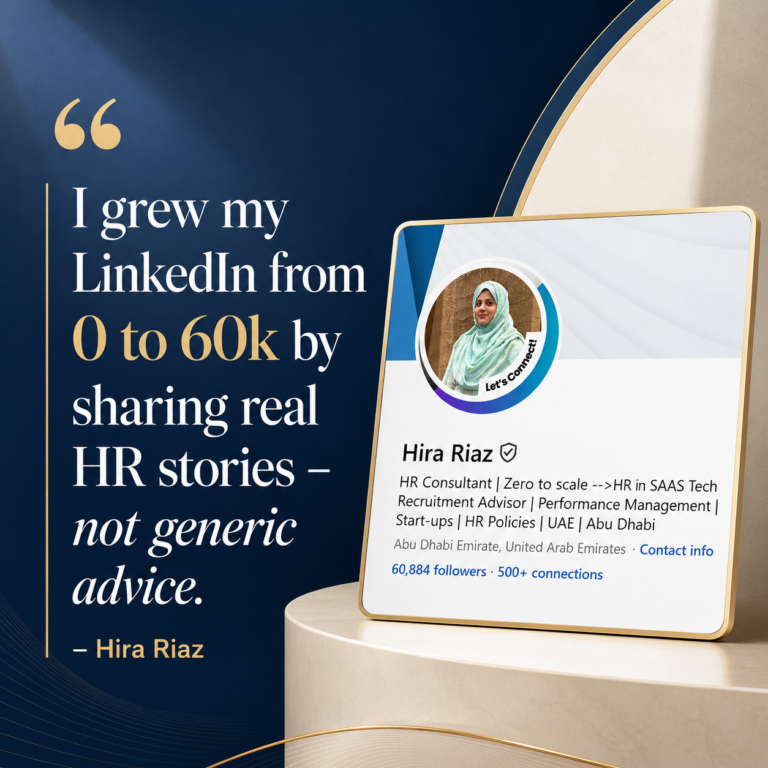
Not by being the loudest. But by showing up authentically with my words.
In this guide, I’ll show you a job search strategy for 2026 that actually works.
No fluff. No outdated advice.
You’ll learn how to find unadvertised jobs, network as an introvert, ask for referrals without awkwardness, use AI without being rejected, and protect your mental health along the way.
Whether you’re a fresh graduate, a career changer, or someone returning after a break – this is for you.
If your job search begins with resigning from a difficult workplace, protect your professional reputation and keep your resignation factual. Use these resignation letter examples to communicate your decision professionally.
Why the “Spray and Pray” Method Fails (Data You Need to Know)
If you’re applying to 50 jobs a week online and hearing nothing, you’re not alone. CareerXRoads source-of-hire data has historically shown that online channels such as career sites and job boards account for a significant—but not complete—share of external hires, which is why networking and referrals still matter.
Here’s what happens when you only apply online:
- Your resume competes with 200+ other applicants for every role.
- An ATS (Applicant Tracking System) filters out 75% before a human sees them.
- Even if you’re qualified, you’re invisible.
I’ve seen this from both sides. As a hiring manager, I rarely looked at the online application pile first.
I asked my team for referrals. I reached out to people I’d met at events.
I searched LinkedIn for candidates who engaged with our content.
The job you want is often one conversation away – not one application away.
If you are just starting, I would advise you to first Optimize Your Resume For ATS Screening and strategically prepare for job interviews with proven questions and answers to avoid any hassle later.
The Hidden Job Market: Where 75% of Jobs Are Never Advertised
The “hidden job market” sounds mysterious, but it’s simple: jobs that are filled before they’re posted or never posted at all.
The numbers are striking. Research and recruiting industry data consistently show that networking and referrals play a major role in hiring.
Forbes has reported that 85% of jobs are largely filled through networking, while Jobvite-related source-of-hire data has historically shown that referrals can produce a much higher share of hires than their share of applicants.
What does this mean for you?
If you’re only applying to posted jobs, you’re competing for a tiny fraction of available opportunities.
How to Access the Hidden Job Market (Step by Step)
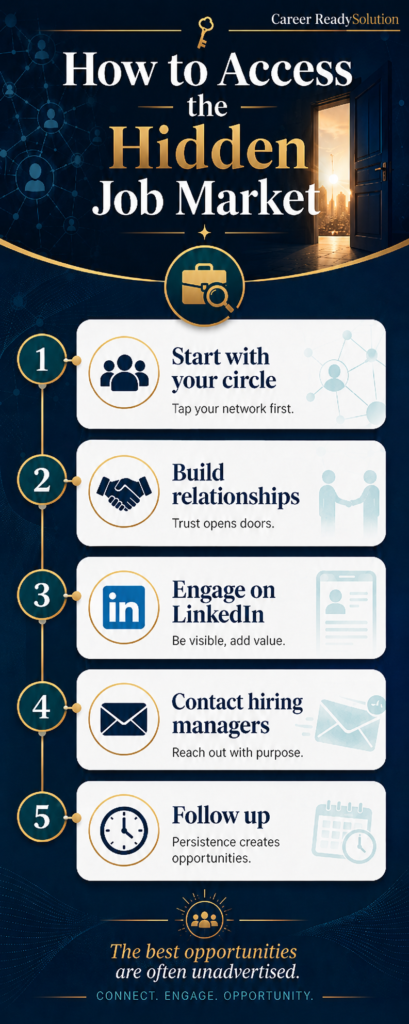
Step 1: Start with your existing circle.
Before you look anywhere else, reach out to people you already know. Friends, family, former colleagues, professors, and alumni should be your first contacts.
Let them know you’re looking and what kind of role you want. You’d be surprised how many opportunities come from someone’s passing mention.
Step 2: Build genuine relationships before you need them.
Networking isn’t transactional.
It’s about building authentic connections over time. Join industry groups on LinkedIn. Attend webinars and virtual meetups. Comment thoughtfully on posts by people you admire.
Step 3: Engage actively on LinkedIn.
Join industry groups, participate in discussions, and follow companies you’re interested in. Strategic networking on LinkedIn, referrals, and relationship-building can help job seekers discover opportunities that may not be publicly advertised.
Step 4: Reach out directly to hiring managers.
Even when there’s no advertised role, a thoughtful message to the right person can open doors. Keep it short, respectful, and value‑first. I’ll share specific templates later in this guide.
Step 5: Follow up respectfully.
Even when you don’t hear back, a polite follow‑up can keep you on their radar.
Following up respectfully with target companies, even when no reply is received, can significantly enhance your chances of uncovering opportunities (Harvard Business Review, 2023).
From my experience: When I was hiring for a tech startup, I filled two roles through referrals before we even posted the job ad. Those candidates never competed with the 200 online applicants.
How to Build a Job Search System That Works
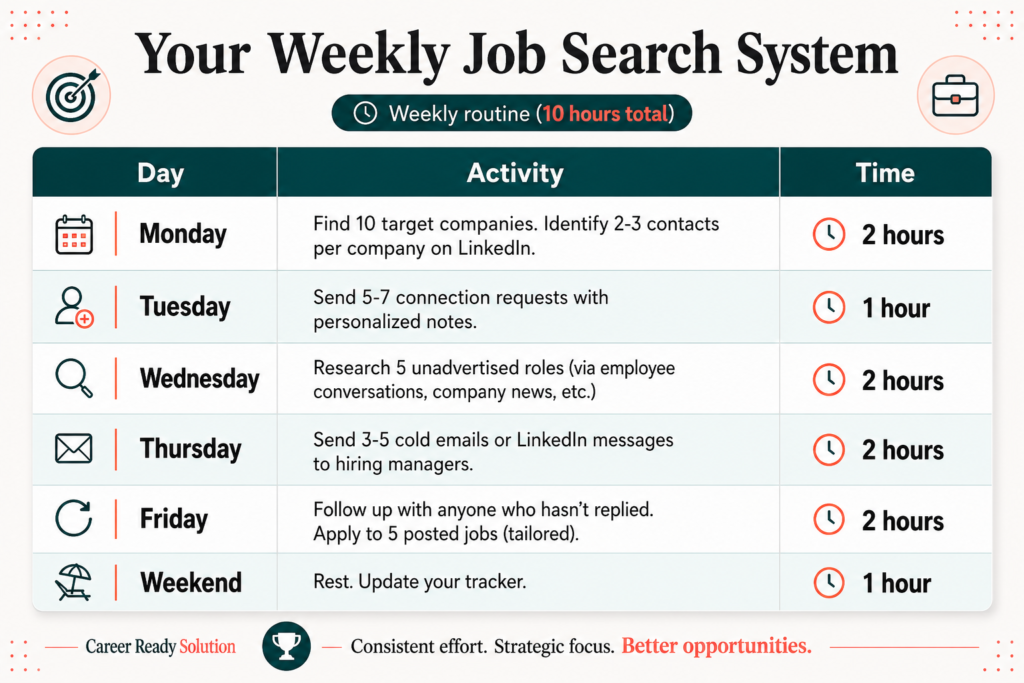
Stop applying randomly. Build a system.
Track everything – use a simple spreadsheet or a free tool like Trello.
Track: company, contact, date contacted, follow‑up date, status.
This system focuses on quality interactions over quantity of applications.
Networking Strategies That Actually Work (Even for Introverts)
I have an ambivert personality. Cold networking used to terrify me. But I learned that networking isn’t about being loud – it’s about being curious.
Introverts are often introspective, reflective, and more comfortable focusing on their inner thoughts and ideas.
When you employ the right strategies, this deliberate approach can translate into job search success.
Low‑Pressure Strategies That Work
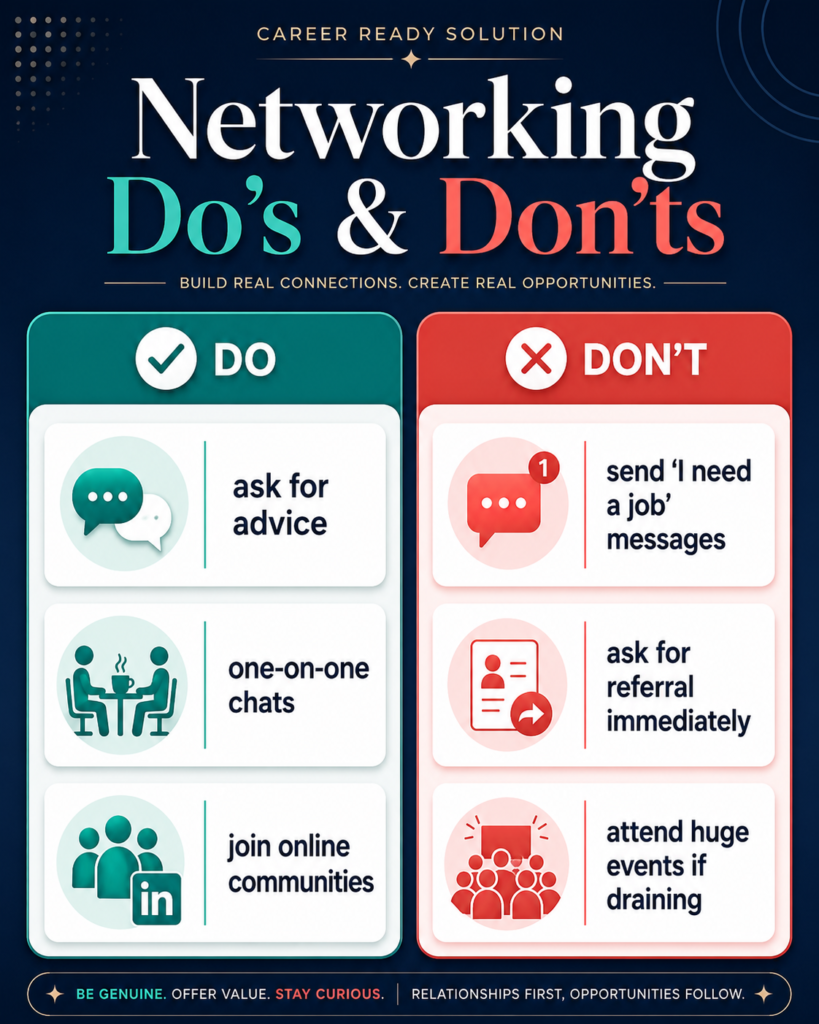
- The “advice” approach
Message someone:
“Hi (Name), I’m a (role) interested in (company). I’d love to hear about your career path for 10 minutes. No job ask – just advice.”
Most people say yes. Instead of asking for a job, you’re asking for information which is flattering and low‑pressure.
- Schedule one‑on‑one chats instead of attending large events
Large networking events can feel overwhelming.
Instead, focus on one‑on‑one conversations. These intimate settings showcase your listening skills, which is a natural strength for introverts. A Lehigh@NasdaqCenter study cited by Physician Leaders found that a future-focused orientation can boost a person’s propensity to network by 12%.
- Volunteer or join committees
Getting involved in an organization or task provides a structured way to meet people while working on a collective goal. It removes the pressure of “networking” and replaces it with meaningful collaboration. - Join online communities
Participation in webinars, online forums, or groups related to your career field is a great way to engage in discussions and share insights that can help build relationships over time. - Leverage digital self‑promotion
While introverts often shy away from in‑person self‑promotion, digital platforms offer a comfortable alternative. Building an online presence on LinkedIn allows you to showcase your professional accomplishments without the anxiety of face‑to‑face interactions. - Create a schedule and stick to it
Building a schedule takes the optionality out of networking. It’s like setting an alarm – it gets you moving automatically.
For each aspect of the job search, establish targets, such as five new contacts and two calls a week, or four meetings a month.
Before an In‑Person Event
- Charge your batteries. Limit social plans before the event and make time for solitude.
- Research. Look up the employers or professionals that will be at the event.
- Make a plan. Attend during a time of day when you tend to have more energy.
What Not to Do
Don’t send “I need a job” messages. Don’t ask for a referral immediately.
Build genuine curiosity first.
Remember, networking isn’t something only reserved for the job search. It’s something you should continuously practice, even when you’re not looking to make a move.
If you’re applying consistently but not getting anywhere, I can help you build a clearer and more focused Job-Search Strategy.
How to Get Referrals Without Being Awkward
Referrals are powerful. Industry research consistently shows that referred candidates are more likely to be hired than cold applicants.
Some LinkedIn-cited data puts referred candidates at 4 times more likely to be hired, while older Jobvite data reported even higher referral advantages. But asking for a referral feels awkward until you have a script.
Template 1 – After a genuine conversation
Subject: Quick question – (Your Name)
Hi (Name),
I was so impressed with your recent work on (Project Name / the career path you’ve built at Company Name).
As a fellow (Role) who is passionate about (Shared Interest), I’ve been following your journey for a while.
I’m currently exploring roles in the (Job Title) space, and the (Job Title) role at your company showed up. I’d love to learn from your experience.
Template 2 – For alumni
Subject: Fellow (University) alum – referral request
Hi (Name),
I’m a fellow (University) alum (Class of [Year]). I’m applying for the (Role) position at (Company) and noticed you’re on the team.
Would you be open to referring me? I’ve attached my resume for your reference. No pressure at all.
Thank you either way.
Template 3 – Short and polite (LinkedIn message)
Hey (Name),
I hope you’re doing well!
I came across the (Position Title) opening at (Company) and thought I’d give it a shot. Since you’ve been part of the team for a while, I was wondering if you’d be open to sharing any tips or maybe even referring me? No worries at all if it’s not possible – I totally understand.
Regards,
Template 4 – After a referral request (asking for insights first)
Hi (Name),
I saw that (Company) is hiring for a (Role), and it looks like a perfect fit for my background in (Skill/Field). I’m really excited about the opportunity and would love to get your insight on the role.
If you feel it’s a good match, would you be open to referring me? I’d be happy to share my resume first.
Template 5 – For a role you’re passionate about
Subject: Referral request – (Role) at (Company) – (Your Name)
Hi (Name),
I’ve been following (Company) for (time period) and was thrilled to see the (Role) opening.
I noticed you’re on the team and would be grateful for a referral if you think I’d be a good fit.
I’ve attached my resume. Happy to answer any questions.
Thank you so much for considering.
Pro tip: Never ask for a referral without sharing your resume first. Make it easy for them. Also, be clear about the position you’re applying for and keep it polite and straightforward.
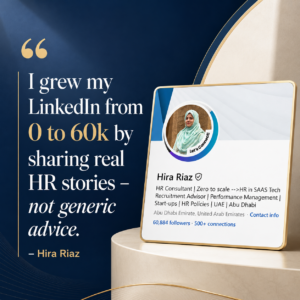
How I Grew My LinkedIn Following from 0 to 60k (And How You Can Use LinkedIn to Get Hired)
I didn’t wake up with 60,000 followers. I tried multiple strategies – some failed, some worked.
What failed:
- Posting generic “I’m hiring” updates (no engagement).
- Sharing links without context.
- Connecting with strangers without a note.
What worked:
- Sharing real HR stories – the resume I almost rejected, the candidate who negotiated poorly, the typo that cost a job.
- Posting consistently (3–4 times a week) for 18 months.
- Engaging genuinely in comments – not just “Great post”, but thoughtful replies.
- Using carousels (PDFs) to break down complex topics (e.g., “10 ATS keywords”).
- Being vulnerable – sharing my own failures and lessons.
How you can use LinkedIn to get hired (without 60k followers):
- Optimize your headline – not “Looking for opportunities”, but “Marketing Analyst | Data Storyteller | Open to Roles in Tech”.
- Post about your job search journey – what you’re learning, what you’re looking for, a project you’re proud of.
- Comment on posts by recruiters – add value, don’t just say “I’m interested”.
- Turn on “Open to Work” – but only visible to recruiters (not public) to avoid looking desperate.
I built my following by sharing what I actually knew, not what I thought people wanted to hear. You can do the same on a smaller scale to get noticed.
Job Search Burnout: Signs and How to Recover (Real Advice, Not Generic)
I’ve seen brilliant candidates burn out. They apply non‑stop, refresh their email every hour, and feel rejected after every silence.
The numbers are concerning. According to the 2025–2026 Aflac WorkForces Report, 61% of American workers report at least a moderate level of burnout, while burnout has reached a seven-year high.
For job seekers, the emotional impact is also serious. Upwork cites job-search data showing that 79% of job seekers experience anxiety during their search, and 72% say job hunting has negatively impacted their mental health.
Meanwhile, Huntr’s Q2 2025 Job Search Trends Report found that the median time to first offer increased by 22% to 68.5 days.
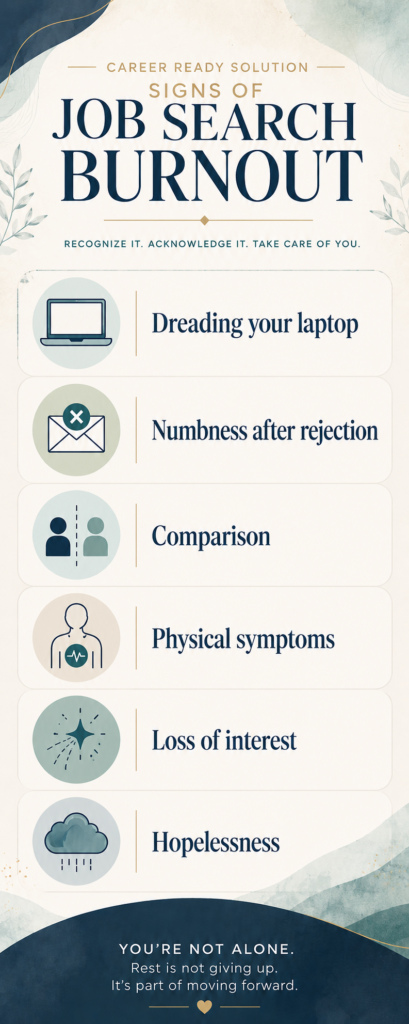
How to Recover (Real Advice, Not Generic)
- Set a time limit – and stick to it.
Job search 4 hours a day, max. Treat it like a workday, not a life sentence. - Take two full days off every week.
Your brain needs rest to process and re‑energize. I learned this the hard way – pushing through burnout only made it worse. - Redesign your job search to be sustainable.
If applying to 30 jobs a week is burning you out, cut it to 10. If networking events drain you, replace them with one‑on‑one virtual coffee chats.
The goal is consistency, not intensity.
If rejection, employer silence or slow progress is affecting your confidence, use these practical strategies to stay motivated during your job search.
Cold Email Templates That Get Replies (5 Templates from My Own Outreach)
I’ve sent hundreds of cold emails to business owners, hiring managers, recruiters, and potential mentors. Here’s what works.
The key is to lead with specific knowledge about the company and connect your experience directly to their needs.
Getting a reply is just step one. Once that turns into an interview, see my Complete Interview Prep Guide covers what comes next.
Template 1 – To a hiring manager (unadvertised role)
Subject: (Role) opportunity – (Your Name)
Hi (Name),
I’ve been following (Company)’s work in (specific area). I noticed you don’t have a posted opening for a (Role), but I wanted to introduce myself anyway.
I’m a (role) with (X years) experience. At (Previous Company), I (quantified achievement).
I’d love to chat if you see a potential fit. Here’s my resume:
Thank you for your time.
Template 2 – To a recruiter after applying (follow‑up)
Subject: Following up – (Role) application – (Your Name)
Hi (Name),
I applied for the (Role) position on (date). I’m very excited about the opportunity because (specific reason about company or role).
I’d love to briefly connect if you have time.
Thank you for considering my application.
Template 3 – To a potential mentor (for advice, not a job)
Subject: Quick career advice – (Your Name)
Hi (Name),
I’m a (role) and an admirer of your work in (specific area).
I’d be grateful for 10 minutes of your time to ask a few questions about your career path. I’m not asking for a job – just advice.
Would you be open to a quick chat?
Thank you either way.
Template 4 – For a role you’re passionate about (with company research)
Subject: (Role) at (Company) – (Your Name)
Hi (Name),
I’ve been following (Company) for (time period) and was excited to see the (Role) opening. Your recent (product launch / initiative / news) caught my attention because (specific reason).
I have (X years) experience in (field) and have (quantified achievement). I’d love to contribute to your team.
Here’s my resume: (Attachment)
Thank you for your consideration.
Template 5 – Short and direct (best for busy executives)
Subject: (Role) inquiry – (Your Name)
Hi (Name),
I’m a (role) with (X years) experience. I’ve been following (Company) and would love to discuss how I could contribute to your (team/department).
Here’s my resume: Attachment
I’d appreciate a brief conversation if you see a potential fit.
Thank you.
Followed up but still haven’t heard back? It doesn’t always mean you’ve been rejected. Here are 11 reasons recruiters ghost candidates and what you can do next.
How AI Is Changing Job Searching in 2026 (And How to Adapt)
AI is everywhere – in ATS systems, in resume screeners, and in the tools job seekers use. Here’s what you need to know.
How Employers Use AI (The Numbers)
The adoption of AI in hiring is accelerating rapidly. A Resume.org survey of 1,399 full-time U.S. workers found that 57% of companies already use AI to support hiring.
Among those companies, 79% use AI to review resumes, while other common uses include candidate assessments, researching applicants, communication, onboarding, and interviews.
Looking ahead, the same Resume.org report found that 62% of companies planning to increase AI use say it is extremely or very likely that AI will run their entire hiring process by the end of 2026.
Separately, LinkedIn’s 2026 talent research found that 93% of recruiters plan to increase their use of AI in 2026, with 66% planning to increase AI use for pre-screening interviews.
How You Can Use AI (Ethically)
- ChatGPT – to rephrase bullet points, generate cover letter drafts, or practice interview questions.
- Resume optimization tools – Jobscan, SkillSyncer – to match keywords.
- LinkedIn AI suggestions – for connection requests and profile headlines.
What NOT to Do
- Don’t copy‑paste AI‑generated answers word‑for‑word. Don’t copy-paste AI-generated answers word-for-word. I have break down exactly where AI helps and where it hurts your resume — including how to avoid this exact mistake.
- Don’t lie about skills. AI doesn’t catch everything, but humans will.
- Quality > quantity. ALWAYS!
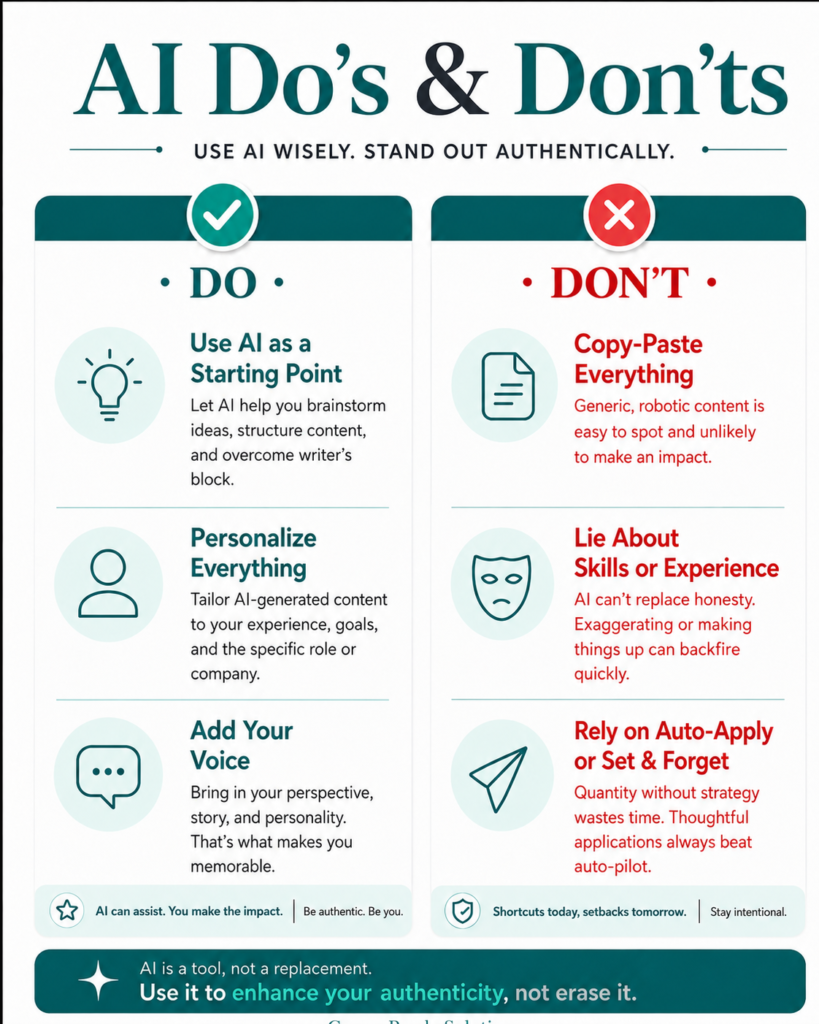
How to Adapt
Use AI as a starting point, then personalize.
Add YOUR voice, YOUR stories, YOUR numbers. That’s what I look for as an HR Consultant.
Pro tip: Make your application “AI‑friendly” by using standard headings (not creative ones), including relevant keywords from the job description, and avoiding complex formatting like tables or text boxes. AI systems are trained to parse clean, structured resumes.
Conclusion & Next Steps
I started this guide with my own story – the 47th application, the referral that changed everything, the pivot from NGOs to tech-start-up to consulting. I’ve been an introvert who felt lost at networking events. I’ve also been the hiring manager who reviewed thousands of resumes.
The job search game has changed. Online applications alone won’t get you there. But hidden jobs, referrals, smart networking, and authentic personal branding will.
If you’re feeling stuck, start with just one small step today. Not the whole job search – just one message, one application, one hour of research. That’s how progress happens. You’ve got this.
Take one action today:
- Send one LinkedIn message to an alum.
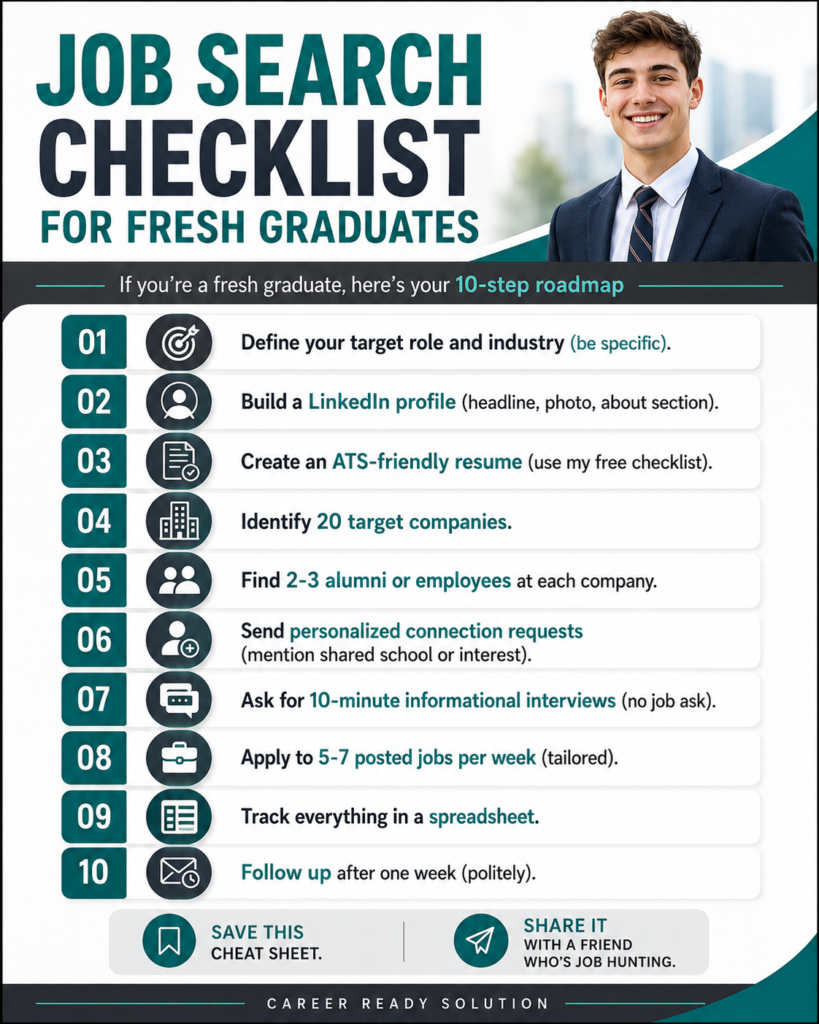
- Or download my free job search checklist.
- Or optimize your LinkedIn headline using the formula above.
Ready to go deeper?
ATS‑Friendly Resume Templates – get past the screeners.
Salary Negotiation Guide & Scripts – when you land the offer.
Interview Prep Kit – practice STAR method.
Connect with me on LinkedIn – I share daily job search and career tips with my 60,000+ community.
Key Takeaways
Only 20% of jobs are filled via online applications – focus on the hidden market.
Build a weekly system – track contacts, follow-ups, and applications.
Network with curiosity, not desperation – ask for advice, not jobs.
Referrals work – use the templates above to ask without awkwardness.
Optimize your LinkedIn – headline, about section, and engagement matter.
Cold emails get replies – keep them short, personalized, and value-first.
Use AI as a tool, not a crutch – personalize everything.
Prevent burnout – set time limits, take breaks, celebrate small wins.
Fresh graduates need a roadmap – use the 10-step checklist.
You’re not alone – millions are job searching. Stay consistent and kind to yourself.
Frequently Asked Questions
1. How many jobs should I apply to per week?
Focus on 5‑7 quality, tailored applications. More than 15 per week usually means you’re not customizing.
2. Should I follow up after applying?
- Yes, wait 5‑7 days. Send a brief, polite email to the recruiter or hiring manager.
3. What if I don’t have a network?
Start small. Connect with alumni, former classmates, and people who share your interests. Comment on posts. Your network grows one conversation at a time.
4. How do I explain being laid off?
Be honest but brief. “My role was eliminated due to restructuring. I’m proud of what I accomplished, and I’m excited about the next opportunity.”
5. Is it okay to take a break from job searching?
Absolutely. Burnout hurts your performance. Take a weekend off, or even a full week. You’ll come back stronger.
7. Should I use the same resume for every application?
No. Tailor your resume and cover letter for each role. Even small changes improve your match rate.
8. How long should a job search take?
On average, 3‑6 months. Don’t panic if it takes longer. Use the time to upskill and network.
9. What if I’m overqualified for a role?
Address it in your cover letter. Explain why you’re interested despite the level (e.g., career change, better work‑life balance, company mission).
10. How do I handle a gap in my resume?
Be honest. List the gap as “Career Break” with a brief note (e.g., family care, health, travel, upskilling). Focus on what you learned.
11. Can I negotiate a job offer if I’m unemployed?
Yes. Research market rates and base your ask on the role, not your previous salary. Use my salary negotiation scripts.
12. What’s the best time to apply for jobs?
Tuesday and Wednesday mornings (recruiters are less overwhelmed). Avoid Friday afternoons and weekends.
13. Should I work with a recruiter?
Yes, especially for contract or specialized roles. But remember: recruiters work for companies, not for you. Be professional and responsive.
14. How do I know if a job posting is fake?
Red flags: generic description, no company name, asks for money, unrealistic salary.
Before investing time in an application, verify the company, recruiter email and role details. Use my guide on how to know if a job posting is fake.
15. Where can I get more help?
Download my free job search checklist, explore my ATS‑friendly resume templates, or connect with me on LinkedIn. I share daily tips with my 60,000+ followers.
About the Author
Hira Riaz is an HR Consultant with 7+ years of experience hiring across tech startups, pharma, and NGOs. Having reviewed hundreds of resumes and interviewed candidates across roles, she brings real recruiter insights into what actually works in today’s job market.
She specializes in resume optimization, interview strategy, and career growth, helping professionals turn their experience into interview calls. She also shares practical career advice with 60,000+ professionals on LinkedIn.