Career Ready Solution

Resignation Letter Due to Unfair Treatment: How to Write It (+ 7 Examples)


Author: Hira Riaz
Published On 1st Oct, 2026.

TABLE OF CONTENTS

Should You Mention Unfair Treatment in Your Resignation Letter?
How to Write a Resignation Letter When You Have Been Mistreated
What HR Actually Looks for in Your Resignation Letter

Resignation Letter Due to Unfair Treatment Examples (7)

Resignation Letter vs. Formal Grievance: What Belongs Where?
Before You Send the Letter
Conclusion: Leave Clearly, Factually and Professionally

Estimated read time 9 minutes.

How do you write a resignation letter when you have been mistreated?

State clearly that you are resigning, provide your final working date and briefly explain the unfair treatment only if you want it formally documented. Keep the language factual and avoid insults, threats or unsupported accusations. If the situation involves harassment, discrimination or possible legal action, consider documenting the incidents in a separate grievance.

A resignation letter due to unfair treatment should be brief, factual and professional—even when the experience behind it has been painful.

If you are reading this, you may already know that you need to leave. The harder question is what to put in writing. Should you explain what happened, keep the letter neutral or submit a separate grievance so the problem is formally documented?

This guide will help you decide how much to disclose, understand what HR needs and choose the right resignation-letter style for your situation. 

You will also find seven practical examples covering a toxic boss, a difficult coworker, mental harassment or workplace bullying, health and stress, and immediate resignation.

If you are leaving without another position secured, plan your next career move before sending the letter so that one difficult workplace does not push you into another unsuitable role.

Should You Mention Unfair Treatment in Your Resignation Letter?

Sometimes—but not always.

The approach depends on whether you want simply to leave, document the reason, or raise a formal complaint.

Which Resignation Approach Should You Choose?

Approach
When to Use It
How Much Detail to Provide
Neutral resignation
You want a clean, professional exit
State your resignation and final date without discussing the mistreatment
Brief but honest resignation
You want the reason recorded
Mention the concern in one or two factual sentences
Resignation with a separate grievance
The mistreatment requires investigation or detailed documentation
Keep the resignation brief and provide incidents, dates and evidence separately

Takeaway

You do not have to place your entire experience inside the resignation letter. The letter confirms your departure. The grievance documents what happened.

How to Write a Resignation Letter When You Have Been Mistreated

1

State Your Decision Clearly

Confirm your position and intention to resign. Start with a direct statement: "I am writing to formally resign from my position as [Job Title] at [Company Name]."

2

Provide Your Final Working Date

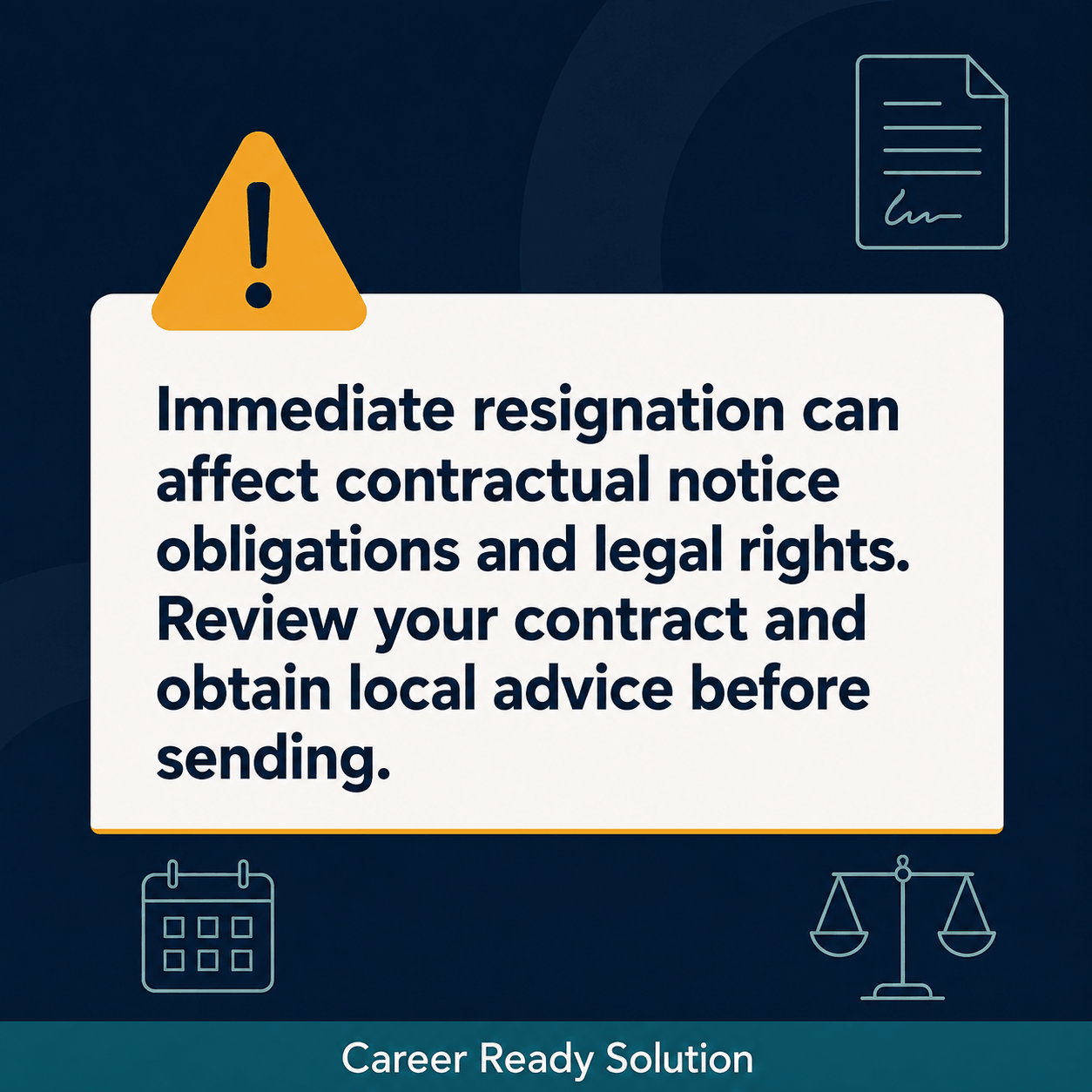
Mention the applicable notice period as per your contract. If you are resigning immediately, note that this may affect contractual notice obligations.

3

Explain the Reason Briefly—If You Choose To

Use neutral, factual wording rather than emotional accusations. Example: "I have decided to resign due to ongoing workplace conduct that has made it difficult for me to continue in my role."

4

Request Confirmation and Next Steps

Ask for acknowledgment, final salary information, benefits documents or handover instructions.

5

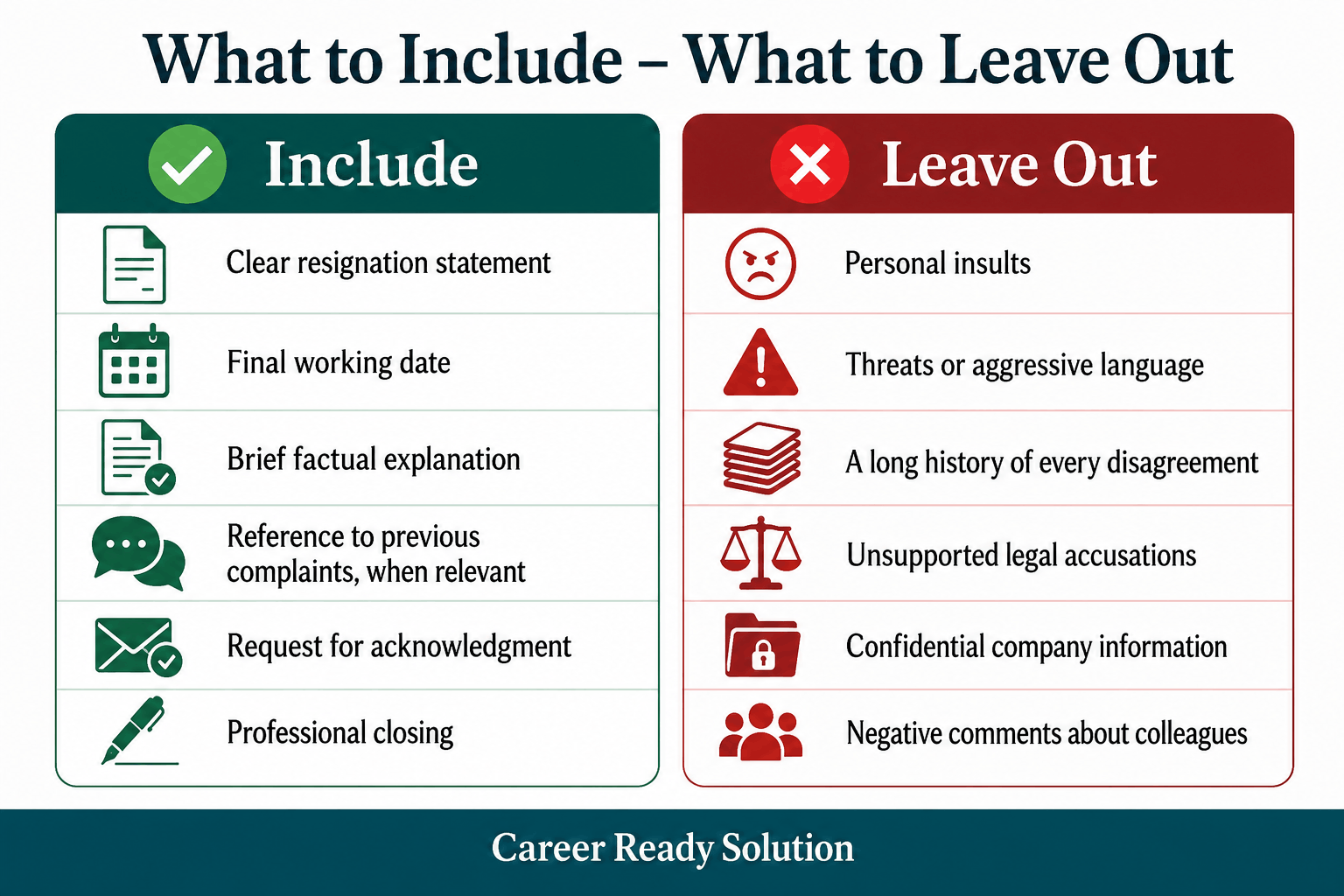
What to Include and What to Leave Out

What to avoid in writing a resignation email

You may eventually be asked why you left, so learn how to avoid the interview mistakes that can turn an honest departure into a red flag.

What HR Actually Looks for in Your Resignation Letter

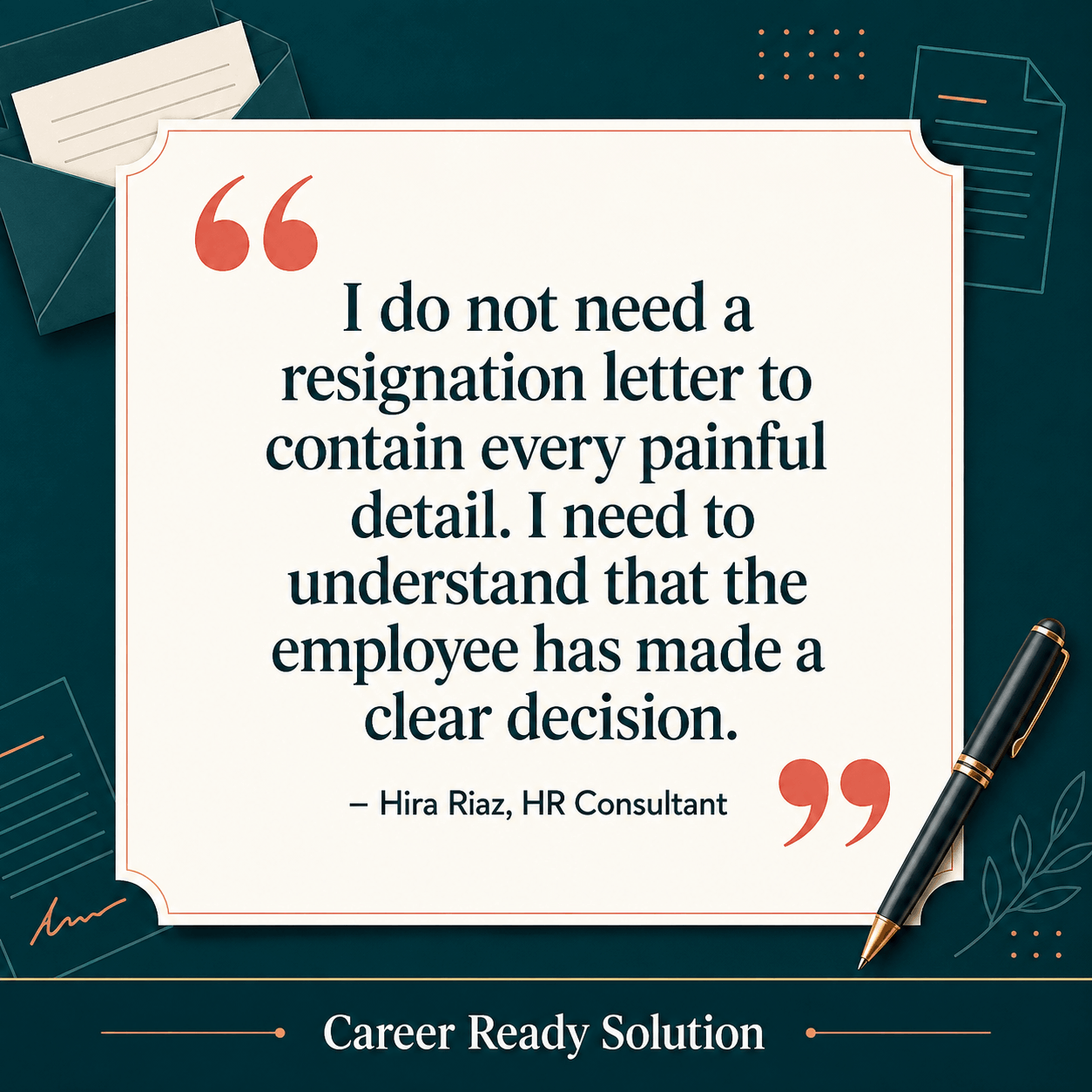
From my HR perspective, I do not need a resignation letter to contain every painful detail. I need to understand that the employee has made a clear decision, when they intend to leave and whether there are concerns that require a separate investigation.

Being in HR profession for more than seven (7) years, I have processed many resignations across Pharma, NGOs, and Tech startup, here’s what I’ve always looked for:

  • A clear resignation decision – no ambiguity
  • The last working day – so we can process your exit
  • Notice-period information – to ensure contractual compliance
  • A factual reason, if provided – so we know if there’s a pattern of concern
  • Whether a grievance or investigation is required – so we can act appropriately
  • Any handover or administrative request – to ensure a smooth transition

Resignation Letter Due to Unfair Treatment Examples

1 Simple Resignation Letter Due to Unfair Treatment

Dear [Manager/HR],

Please accept this letter as formal notification of my resignation from [Company Name], effective [date].

After careful consideration, I have decided to resign due to ongoing workplace conduct that has made it increasingly difficult for me to continue in my role effectively. I have previously raised my concerns through the appropriate channels and have not seen adequate resolution.

I am grateful for the opportunities I have had during my time here and I wish the company well. However, I believe this decision is in my best professional interest.

I would appreciate your confirmation of receipt of this resignation. Please also inform me of the next steps regarding my final salary, accrued leave, benefits, and the handover process.

Yours sincerely,
[Your Name]

2 Resignation Letter Due to a Toxic Boss

Dear [Manager/HR],

I am writing to formally resign from my position as [Job Title] at [Company Name]. My final working day will be [date].

I have made this decision after careful reflection on the management style I have experienced during my employment. The working environment has become increasingly difficult to navigate professionally, and despite my attempts to address my concerns, the situation has not improved to a level that would allow me to continue effectively.

I do not wish to go into detail in this letter, but I believe it is important to document that my resignation is due to ongoing management conduct that I consider unacceptable in a professional setting.

Please let me know what steps I need to take for a smooth handover and regarding my final settlement.

Yours sincerely,
[Your Name]

3 Resignation Letter Due to Bad Behavior at Work

Dear [Manager/HR],

Please accept this letter as my resignation from [Company Name]. My last day of work will be [date].

I am resigning due to ongoing inappropriate workplace conduct that has persisted despite my previous attempts to raise the issue through the proper channels. I no longer believe the working environment aligns with the professional standards I expect and which I believe are reasonable in any workplace.

I have documented my concerns previously and I trust that my departure will be handled professionally. I would appreciate confirmation of my resignation and any relevant paperwork regarding my final salary, benefits, and exit process.

Thank you for the opportunities I have had during my time here.

Yours sincerely,
[Your Name]

4 Resignation Letter Due to Mental Harassment or Workplace Bullying

Dear [Manager/HR],

I am writing to formally resign from my position at [Company Name], effective [date].

My decision to resign is based on repeated workplace harassment that has significantly affected my wellbeing and my ability to perform my duties effectively. I have previously raised my concerns and have not seen adequate resolution or improvement.

I request that this letter be placed on my personnel file as a formal record of my reason for leaving. I trust that the company will take appropriate steps to address the underlying issues for the benefit of other employees.

Please inform me of the next steps regarding my final salary, benefits, and the handover of my responsibilities.

Sincerely,
[Your Name]
Hira Riaz HR Consultant
5 Resignation Letter Due to Health and Stress

Dear [Manager/HR],

Please accept this letter as my resignation from [Company Name]. My final working date will be [date].

The working environment has had a significant and ongoing impact on my health and wellbeing. After careful consideration and consultation with my healthcare provider, I have decided that resigning is the best course of action for my recovery and long-term health.

I do not wish to provide extensive medical details, but I believe it is important to note that the workplace conditions have contributed directly to my current health situation.

I would appreciate confirmation of my resignation and any information regarding my final salary, benefits, and the exit process.

Yours sincerely,
[Your Name]

6 Resignation Letter Due to Self-Respect

Dear [Manager/HR],

I am writing to formally resign from my position at [Company Name], effective [date].

After careful consideration, I no longer believe the working environment aligns with the professional standards and respectful treatment I expect and which I consider essential for any workplace. I have made this decision with integrity and believe it is the right choice for my professional growth and personal wellbeing.

I do not wish to elaborate on the specifics in this letter, but I trust that my reason for leaving will be understood and respected.

Thank you for the opportunities I have had during my time here. I would appreciate confirmation of my resignation and any relevant paperwork regarding my final settlement.

Sincerely,
[Your Name]

7 Immediate Resignation Letter Due to Unfair Treatment

Dear [Manager/HR],

I am writing to resign from my position as [Job Title] at [Company Name] with immediate effect. My final working day is today, [date].

I am resigning immediately due to serious workplace conduct that I can no longer tolerate. I have previously raised my concerns through appropriate channels and have not seen adequate resolution or improvement.

I believe that remaining in this environment for the notice period would be untenable given the circumstances. I request that this resignation be processed without delay.

I would appreciate confirmation of receipt of this resignation and any next steps regarding my final salary, accrued benefits, and any outstanding entitlements.

Sincerely,
[Your Name]
How to write a resignation email

Resignation Letter vs. Formal Grievance: What Belongs Where?

The resignation letter confirms your departure. The grievance documents what happened and what action is requested. Do not confuse the two.

From My HR Experience: When an Employee Resigned Instead of Raising a Grievance

I once handled the resignation of a software engineer who had joined our company only one month earlier.

When he submitted his resignation, I spoke with him privately and asked whether there was a problem we could address. He told me everything was fine and that he had simply decided to leave. Because he did not raise any concerns, we treated his resignation as a final decision.

On his last working day, however, he asked to withdraw the resignation and remain with the company. By then, the CEO was unwilling to reverse the decision.

It later became clear that the employee had been struggling with the workload and expectations during his first month. Instead of communicating those concerns or submitting a grievance, he resigned.

That experience taught me why employees must understand the difference between the two documents.

01

A grievance says: “There is a workplace problem, and I want the company to address it.”

02

A resignation says: “I have decided to end my employment.”

03

A resignation with a separate grievance says: “I am leaving, but I also want the circumstances formally documented.”

If you want the employer to investigate a problem and you may be willing to stay if it is resolved, raise a grievance before resigning. Do not use a resignation letter as a test to see whether the company will persuade you to remain.

Once you resign, you should not assume that your employer will allow you to withdraw the decision.

If you are unsure whether to resign, raise a grievance or prepare your next move first, you can get personal guidance before making a career decision.

Should It Go in Your Resignation or Your Grievance?

Information Resignation Letter Formal Grievance
Decision to resign Yes No
Final working date Yes No
Brief reason for leaving Optional Yes
Names and dates of incidents Usually no Yes
Detailed supporting evidence No Yes
Witness information No When relevant
Requested investigation Brief reference only Yes

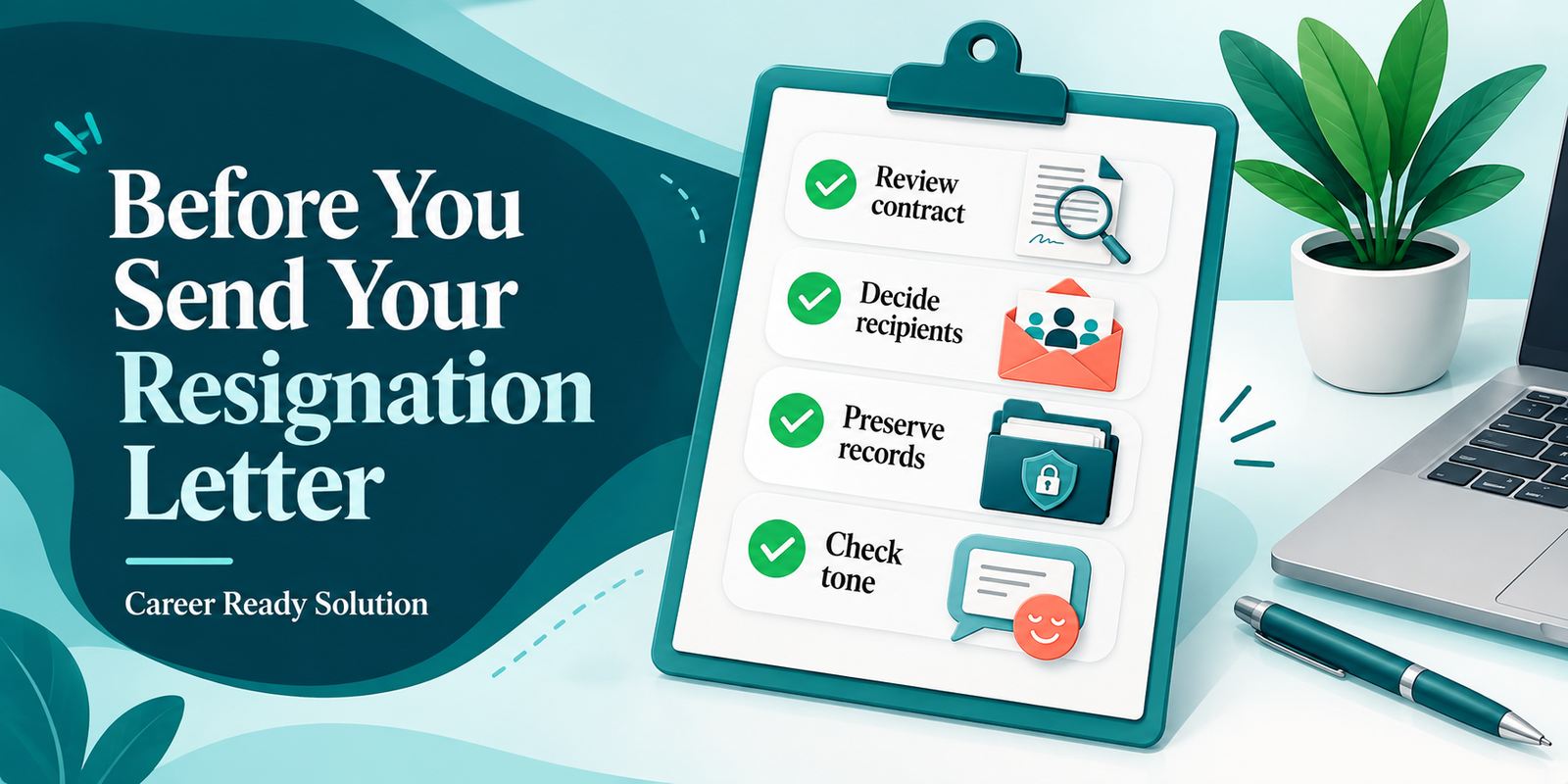
Before You Send the Resignation Letter

1

Review Your Contract and Notice Period

Do not assume mistreatment automatically removes notice obligations. Check your employment contract and local laws.

2

Decide Who Should Receive It

Usually the manager and HR, depending on the company's procedure and who is involved in the complaint.

3

Preserve Appropriate Records

Keep relevant communications and personal employment records where legally permitted. Do not remove confidential company or client information.

4

Check Your Tone One Final Time

Ask yourself: Is every statement factual, necessary and professional? If you're unsure, remove it.
Before You Send Your Resignation Letter

Once your departure is confirmed, your next priority is to rebuild your resume for the opportunities ahead.

Conclusion: Leave Clearly, Factually and Professionally

Professional wording does not mean pretending the mistreatment was acceptable. It means protecting your credibility while creating an appropriate written record.

Your resignation letter is not the place to vent. It is the place to confirm your departure, document your reason factually and request what you need for a smooth exit. If you have serious concerns, use the grievance process and not the resignation letter to provide details.

When recruiters ask about this experience later, prepare a calm and credible explanation for your next interview without criticizing your former employer or disclosing unnecessary details.

How to write a resignation letter when you have been mistreated?

  • State clearly that you are resigning, provide your final working date and briefly explain the unfair treatment only if you want it formally documented.
  • Keep the language factual and avoid insults, threats or unsupported accusations.
  • If the situation involves harassment, discrimination or possible legal action, consider documenting the incidents in a separate grievance.

Frequently Asked Questions

Keep it brief and factual. State your resignation, provide your final working date and mention that the management style has made it difficult to continue. Avoid personal attacks. See the “Resignation Letter Due to a Toxic Boss” example above.

State your resignation and final date, then reference the inappropriate conduct in one or two factual sentences. Do not list every incident. If you need to document details, use a separate grievance. See the “Resignation Letter Due to Bad Behavior” example above.

Start with a clear resignation statement and immediate effective date. Briefly explain the reason and request confirmation of receipt. Important: Immediate resignation can affect your contractual notice obligations and legal rights. Review your contract and obtain local advice before sending this version. See the “Immediate Resignation Letter” example above.

About the Author

Hira Riaz is an HR Consultant with 7+ years of experience hiring across tech startups, pharma, and NGOs. Having reviewed hundreds of resumes and interviewed candidates across roles, she brings real recruiter insights into what actually works in today’s job market.

She specializes in resume optimization, interview strategy, and career growth, helping professionals turn their experience into interview calls. She also shares practical career advice with 60,000+ professionals on LinkedIn.

3 may 2026 about the author