15 Questions to Ask a Recruiter During a Phone Screen
Discover 15 smart questions to ask a recruiter during a phone screen, including questions about the role, salary, work setup and hiring process.
Table of Contents
Explore this complete guide
Introduction
You have a phone screen scheduled. You know the recruiter will ask whether you have any questions—and you want to ask the right ones.
A phone screen is a two-way conversation. Prepare around five questions, although you will usually have time to ask only two or three. The right questions help you understand the role, expectations, compensation and next steps before moving forward.
I have interviewed hundreds of entry-level candidates during university recruitment drives and have experienced phone screens from both sides. In this guide, I’ll share 15 recruiter-appropriate questions, explain what each one reveals and show you what to listen for in the answer.
A recruiter phone screen is only the beginning of the interview process. Once you move forward, use my complete interview preparation guide to prepare your STAR examples, behavioral answers and salary discussion.
15 Questions to Ask a Recruiter at a Glance
Here is the full list at a glance. The detailed explanations follow in the sections below.
| No. | Question | What It Helps You Learn |
|---|---|---|
| 1 | Why is this position currently open? | Whether the role is new, vacant or experiencing turnover |
| 2 | What are the most important priorities for this role? | What the employer expects from the successful candidate |
| 3 | What does a typical day look like? | The position's actual responsibilities |
| 4 | Which skills is the hiring manager prioritizing? | How to position your experience |
| 5 | How is the team structured? | Team size and working relationships |
| 6 | Who would this position report to? | Reporting structure and management context |
| 7 | How would you describe the work environment? | Culture and working style |
| 8 | What is the biggest challenge in this position? | Problems the successful candidate will need to solve |
| 9 | What are the next stages in the interview process? | The remaining hiring steps |
| 10 | Who would I meet during the next interview? | How to prepare for the next conversation |
| 11 | What is the hiring timeline? | When the company expects to make a decision |
| 12 | Is there anything else I should prepare for the next stage? | Additional tests, assignments or requirements |
| 13 | What is the budgeted salary range? | Whether compensation aligns with expectations |
| 14 | Is the position remote, hybrid or office-based? | Working-location expectations |
| 15 | When would you like the successful candidate to start? | The company's urgency and preferred start date |
Swipe horizontally to view all table columns.
Questions About the Role and Its Expectations
These four questions help you understand what the job actually involves. I have seen freshers accept roles without asking these questions, then discover the reality was different from the job advertisement.
If the recruiter mentions communication, leadership, adaptability or collaboration, use this soft skills list for resumes to understand how to demonstrate those qualities with evidence.
1. Why is this position currently open?
This question reveals whether the role is newly created, a replacement, a result of company growth or a position with repeated turnover. Do not assume that a replacement automatically indicates a problem. People leave for promotions, relocations and career changes.
2. What are the most important priorities for this role?
This reveals what the company needs immediately, not merely what appears in the job description. The answer tells you what to emphasize in your next interview.
3. What does a typical day look like in this position?
This question separates real daily responsibilities from broad job-advertisement language. Recruiters may provide a general answer, which is fine at this stage. You can ask the hiring manager for greater detail later.
4. Which skills or experiences is the hiring manager prioritizing?
The answer helps you decide which achievements to emphasize during the next interview. If the hiring manager values project management more than technical skills, you adjust your examples accordingly.
Questions About the Team and Company
These four questions help you understand where you would fit. I have interviewed candidates who joined teams without understanding the structure, then struggled to adapt.
5. How is the team structured?
This covers team size, related departments and cross-functional work. Knowing the structure helps you understand who you would work with daily.
6. Who would this position report to?
The recruiter may describe the manager's role, seniority and responsibilities, even if they cannot fully explain the manager's working style. This tells you what kind of management you can expect.
7. How would you describe the working environment?
Ask for concrete examples rather than accepting words like fast-paced or collaborative. These words mean different things at different companies.
8. What is the biggest challenge someone in this position will face?
Strong candidates show interest in solving problems, not only receiving benefits. This question signals maturity and self-awareness.
If the recruiter cannot clearly explain the company, position or hiring process, verify the opportunity before sharing personal information. These fake job-posting warning signs can help you identify recruitment scams.
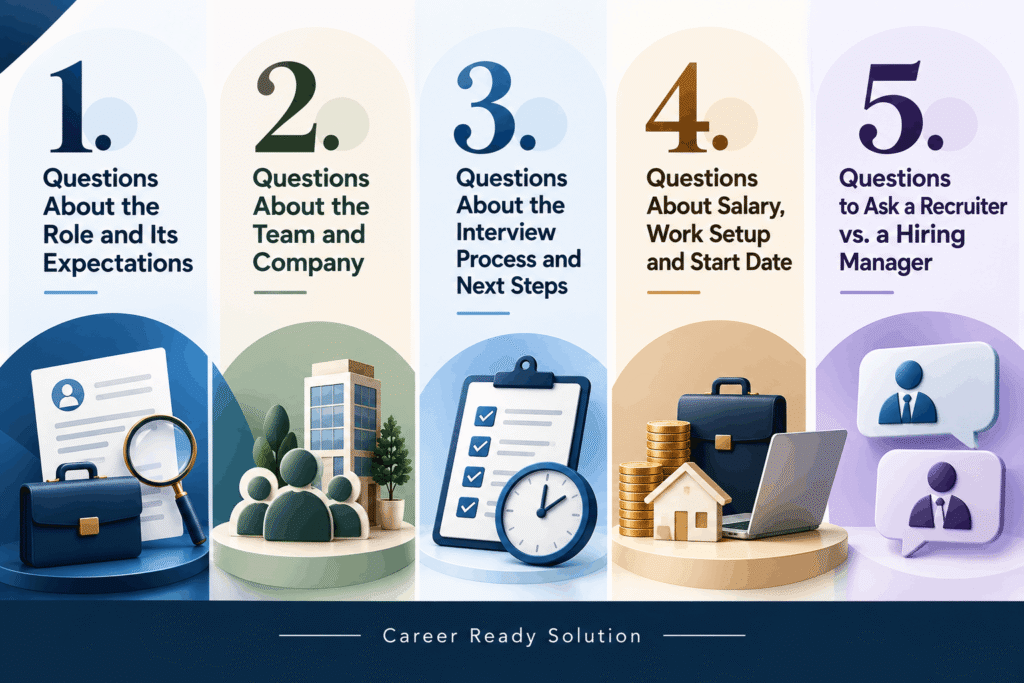
Questions About the Interview Process and Next Steps
These four questions help you prepare for what comes next. I always appreciate candidates who ask about the process because it shows they are organized and serious.
9. What are the next stages in the interview process?
This may include additional interviews, assessments, presentations and background checks. Knowing the full process helps you plan your time.
10. Who would I meet during the next interview?
This helps you research and prepare for the appropriate audience. If you are meeting a technical lead, prepare differently than if you are meeting a department head.
11. What is the expected hiring timeline?
Distinguish between the date of the next interview, the target decision date and the intended start date. These are three different things and candidates often confuse them.
12. Is there anything else I should prepare for the next stage?
This may reveal technical exercises, work samples, case studies or documents. Asking about preparation shows seriousness without sounding presumptuous about advancing.
If the recruiter later tells you the company is still interviewing other candidates, it is normally a process update rather than an automatic rejection.
Questions About Salary, Work Setup and Start Date
An initial recruiter screen is an appropriate place to confirm major practical requirements. If salary or work setup does not align, you save everyone time by clarifying early.
13. What is the budgeted salary range for this position?
Ask for the employer's budgeted range. Do not begin by demanding the maximum salary. Evaluate the entire compensation package. Avoid sharing a rigid number before understanding the position.
14. Is the position remote, hybrid or office-based?
Clarify required office days, office location, working hours, time-zone expectations and travel requirements. These details matter more than the label.
15. When would you like the successful candidate to start?
This helps you understand urgency and disclose notice-period requirements. If the company needs someone immediately and you have a two-month notice period, better to know now.
How to Ask Sensitive Questions Professionally
| Topic | Avoid Saying | Better Wording |
|---|---|---|
| Salary | "How much are you paying?" | "Could you share the budgeted salary range for the position?" |
| Remote work | "Can I work from home whenever I want?" | "What working arrangement has been established for this team?" |
| Benefits | "How much vacation do I get?" | "Could you give me an overview of the benefits package?" |
| Start date | "I can't start soon. Is that a problem?" | "What start date does the company have in mind?" |
Swipe horizontally to view all table columns.
Questions to Ask a Recruiter vs. a Hiring Manager
Recruiters and hiring managers possess different information. Direct your questions to the person best equipped to answer them.
This table shows which questions belong to which person.
| Ask the Recruiter About | Ask the Hiring Manager About |
|---|---|
| Salary range | Daily responsibilities |
| Interview stages | Performance expectations |
| Hiring timeline | Current team challenges |
| Work arrangement | Management style |
| Benefits | First 90-day goals |
| Start date | How success will be measured |
Swipe horizontally to view the full table.
Your questions should change when you reach the hiring-manager stage. Use these questions to ask at the end of an interview to prepare for that conversation.
Questions for Different Employment Situations
Your situation changes which questions matter most. Use this table to find the right question for your circumstances.
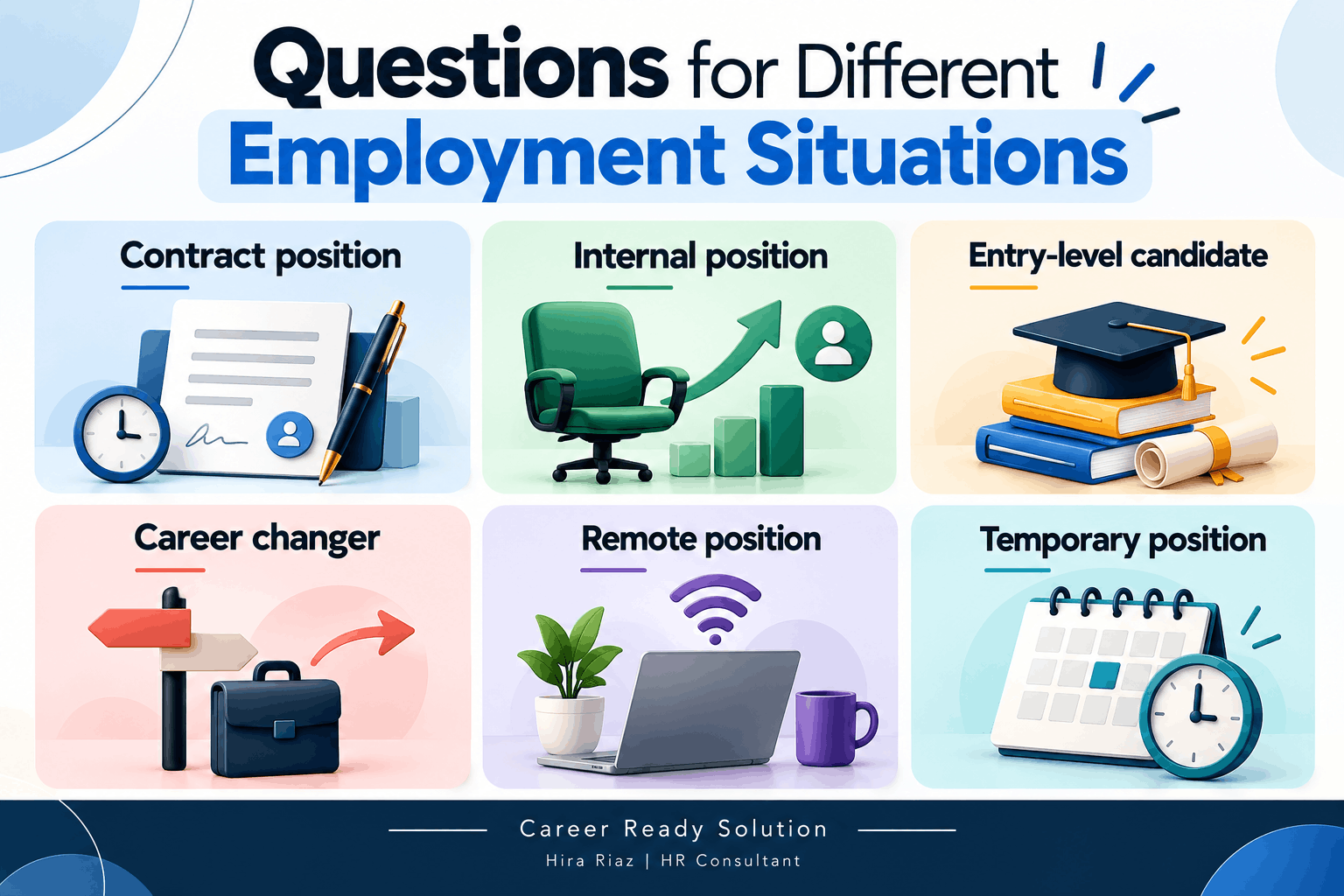
| Situation | Recommended Question |
|---|---|
| Contract position | "How long is the contract, and is there a possibility of extension or permanent employment?" |
| Internal position | "How would moving into this position affect my current responsibilities and internal transition?" |
| Entry-level candidate | "What training or onboarding is available to someone beginning in this field?" |
| Career changer | "Which transferable skills would be most valuable in this role?" |
| Remote position | "How does the team communicate and collaborate across locations?" |
| Temporary position | "What outcomes should the successful candidate deliver during the assignment?" |
Swipe horizontally to view the full table.
Having worked as an HR Manager for a Tech start-up, I have interviewed many freshers for entry-level roles. The ones who asked about training and onboarding stood out because they were thinking about how to succeed, not just how to get hired.
If this is your first recruiter call, practise these interview questions for candidates with no experience before the conversation.
Returning professionals may also be asked about periods outside formal employment. Learn how to explain a career gap on your resume and during an interview without apologizing or oversharing.
Questions You Should Avoid During an Initial Phone Screen
A question is usually weak when it could be answered by reading the job advertisement, focuses only on personal benefits, shows no understanding of the company, requests confidential information or assumes you have already received the job.
Here are five weak questions and stronger alternatives.
| Weak Question | Why It Is Weak | Better Alternative |
|---|---|---|
| "What does your company do?" | Shows inadequate research | "How does this team contribute to the company's current goals?" |
| "How quickly can I be promoted?" | Focuses prematurely on advancement | "How can someone grow after succeeding in this position?" |
| "Did I get the job?" | The recruiter may not have decided | "What are the next steps in the hiring process?" |
| "Is the work difficult?" | Too vague | "What is the biggest challenge someone in this role will face?" |
| "Can I take time off immediately?" | Introduces benefits without context | Discuss a known commitment when timing becomes relevant |
Swipe horizontally to view all table columns.
Asking weak or easily researched questions is only one of several common interview mistakes that can affect how an employer evaluates you.
How Many Questions Should You Ask During a Phone Screen?
Prepare five questions. Prioritize the most important three.
Do not ask questions already answered during the conversation. Keep your final questions brief because initial phone screens are often time-limited.
Here is a recommended order:
- Role or priorities
- Hiring process
- Salary or work arrangement
- One tailored follow-up
How to Choose the Right Questions
Do not mechanically read all 15 questions. Choose based on what matters most to you and what the job description does not explain.
Here is a simple method:
- Review the job description.
- Mark important information that is missing.
- Research the company.
- Select questions that affect your decision.
- Place them in priority order.
- Keep one backup question about next steps.
How to Close the Phone Screen Professionally
End the call with a clear, professional closing. This leaves a strong final impression.
"Thank you for explaining the position and the next steps. Based on what we discussed, I am very interested in continuing. Is there anything else you need from me at this stage?"
After the call:
- Confirm the next step
- Confirm the expected timeline
- Thank the recruiter
- Send a brief follow-up message
- Record important details immediately
Write down the timeline the recruiter gives you. If the promised date passes without an update, learn why recruiters ghost candidates and when you should follow up.
Phone Screen Question Checklist
Use this checklist before your next phone screen.
Final Thoughts: Make Your Questions Count
The questions you ask are not simply something to fill the final few minutes of a phone screen. They help you discover whether the role matches your goals, expectations and preferred way of working.
You do not need to ask all 15 questions. Choose three to five questions to ask a recruiter during a phone screen, prioritize the ones that matter most and listen carefully to the answers. If the recruiter covers one of your prepared questions earlier, replace it with a relevant follow-up instead of asking it again.
When the recruiter asks, “Do you have any questions for me?” treat it as an opportunity. A thoughtful question can demonstrate preparation, genuine interest and professional confidence.
Ready for Your Next Interview?
What Questions Should You Ask a Recruiter During a Phone Screen?
Prepare these five questions to make your recruiter phone screen more productive:
- ✓ Why is this position currently open?
- ✓ What are the most important priorities for this role?
- ✓ What is the budgeted salary range?
- ✓ Is the position remote, hybrid or office-based?
- ✓ What are the next stages in the interview process?
Prepare five questions. Ask two or three and keep them brief and relevant.
Frequently Asked Questions
Ask about responsibilities, priorities, team structure, salary range, work arrangement, hiring process and timeline. Choose three to five questions that matter most to your decision.
Prepare five and ask two or three, depending on available time. Prioritize the questions that affect your decision most.
Yes, particularly when speaking with a recruiter. Ask for the budgeted range professionally. This saves time for both sides.
Ask about contract length, extension possibilities, employment classification, working hours, compensation and expected deliverables.
Ask about transition timing, reporting structure, internal selection process, effect on current responsibilities and confidentiality.
No. Recruiters handle process and compensation. Hiring managers are better for daily work and performance expectations. Direct your questions accordingly.
Acknowledge that the questions were answered and use follow-ups based on something the recruiter said. This shows you were listening.
Confirm next steps, timeline and whether the recruiter requires any additional information from you.
About the Author
Hira Riaz is an HR Consultant with 7+ years of experience hiring across tech startups, pharma, and NGOs. Having reviewed hundreds of resumes and interviewed candidates across roles, she brings real recruiter insights into what actually works in today’s job market.
She specializes in resume optimization, interview strategy, and career growth, helping professionals turn their experience into interview calls. She also shares practical career advice with 60,000+ professionals on LinkedIn.